
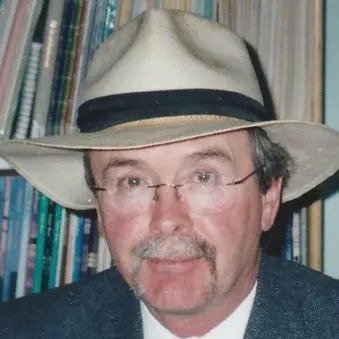
In our primes (i.e. before the age of 60) Scott and I played countless games of tennis at which he beat me 95% of the time. We began playing in Saskatoon where we both lived at the time. I can’t remember how or why we started our tennis session because I had no idea of how the game was played. But how hard could it be? You knocked a ball over a net with a racket trying to get the other guy to fail knocking it back over at you. All my years of playing hockey and golf surely lent me some skills at hitting a ball over a net with a racket.
Apparently not. But we played anyway because it was a “good workout”. I am six-foot-one; Scott would have been five-foot-eight if he stood on his toes. I could not beat him. The only shot of mine that he had a hard time handling was a backhand slice. It landed at his feet and never seemed to bounce in the direction it was heading. So, I used it as often as I could—once or twice a game. Scott was a good enough player that he kept the ball away from my backhand. He made me hit my listless, pathetic forehand—usually into the net or beyond the backcourt. I had no control over it whatsoever.
Still, we played on, and when I was writer-in-residence in Estevan, we played there in that stupid, ceaseless wind where he continued to beat me. However, he didn’t come to Estevan to visit me and beat me at tennis, he came to rekindle a relationship he had fomented years earlier in Yorkton where he had been a newspaper reporter back when small towns had newspapers and actual reporters working for them. He had taken a strong liking to the school librarian in Yorkton and was pleased to learn that she had relocated to Estevan. Laurel did not play tennis but had many other attributes that endeared her to Scott, among them, a love of books. Scott was a writer.
I can’t remember when or how we met but my first active memories are of him sweeping the sidewalks on Second Avenue in downtown Saskatoon. So, I must have known who he was to recognize him on the street. In my memory, he wears a Hi-Viz vest and yellow hardhat. But that just may be me trying to tart Scott up a bit. He was poor. He lived in a tiny basement apartment in the Broadway area where I visited him often to drink beer and smoke “rollies” of Drum tobacco. We discussed literature and writing. We discussed writers and the politics of the writing community of the day. Although we were part of that community and were even members of the Saskatchewan Writers’ Guild, we never felt as though we belonged—I drove cab and Scott swept streets. These were not writerly jobs. These were jobs poor people had when they could not find “real” work. Writing was not real work.
We muddled on. Eventually, I published a novel then several collections of stories. I dabbled in television writing. The producers were stalwarts of the writing community. They bought a story from me but told me they were not going to produce it. However, they did anyway. The WGC (Writers’ Guild of Canada), then a young spinoff of ACTRA (Alliance of Canadian Television and Radio Artists) of which I was a member made them pay me. Scott, however, took a writing class at the U of S. The class was taught by a guest lecturer who was a prominent poet of the Canadian Literati and whose spouse was also of the CanLit elite. For a class assignment, Scott handed in a short story to the guest lecturer who graded it a non-committal “C”. Two years later, a short story appeared in a prominent Canadian Literary Magazine. There were some changes, but it was essentially Scott’s short-story class assignment titled differently than his original. The story was credited to the spouse of Scott’s guest lecturer. There was no union to protect Scott from this theft. There still isn’t. You could file your own lawsuit for plagiarism but no union is going to do it for you. Certainly not the SWG, but not even TWUC (the Writers’ Union of Canada).
These allegations have not been proven in a court of law, but I don’t know if they should go to Scott’s grave with him.
Although he only published two novels (mysteries entitled Silence Invites the Dead and Black Thursday) he never really stopped writing, and his unpublished archives have at least two more manuscripts of which I am aware all of which are set at events of historic significance. Black Thursday for instance, is set at the Estevan coal workers’ strike of 1931; Silence, the Rwandan Tutsi genocide. Another was set at one of the Doukhobor Sons of Freedom demonstrations of the 1950s. These events have links to the present day. I have never understood how this theme wasn’t picked up by a Canadian publisher.
But one further passion we both shared was motorcycles.
The last time I saw Scott was in Rossland, BC. We had arranged to meet “at the Nancy Green Turnoff” which is a junction on the Crowsnest Highway 3 and 3B. I rode from Christina Lake, Scott from Castlegar. From there we’d ride together, he on his Triumph (Trident 660) and I on my Yammy (FJR). The Harley riders we passed doing their emergency wrenching on the roadside would normally scorn-slur our “Nip” bikes as they call anything that isn’t a Harley Davidson, but now they studiously ignored our passing them by. Our metric wrenches were of no use to them anyway.
Rossland is built on top of one of the spectacularly beautiful Monashee mountains, right next to Nancy Green’s Big Red. It was a mining town like Trail ten kilometres below it but today is also a huge recreational mecca for biking, hiking and skiing. There are probably enough yoga mats in Rossland to reach the top of Big Red if strung together. The mat owners are either vegan or paleo in their diet choices. But wine is cool. White. So is coffee. Black.
We met at the Alpine Grind Coffee House and sat outside beneath the establishment’s awning. I munched on something full of nuts and raisons. It was mortared together with a kind of molasses and ancient grain concoction. The coffee was good.
Scott always brought his own food with him. He had a very delicate stomach and was extremely careful about what he ingested. He also had COPD. This, he said, his father also had had and it killed him. He added that it was not particularly comforting to know what he himself would die of, except that he knew that his wife, Laurel, would not be a significant contributor to his demise—which was not the case with his father’s wife.
“My mom essentially killed my dad,” he said. “Not on purpose, like pulling the trigger but she hurried him along.” Scott then went on to tell a story of how his father spent his last days in his bedroom, a room that was freezing cold all the time because he insisted on having the windows open, “to clear the air”. The irony was that although his dad had managed to quit smoking, his mother had not and was still hopelessly addicted to nicotine. Her bedroom was immediately adjacent to his father’s, and she too kept all her windows open to rid her room of smoke. So, as she lit one cigarette after another and blew her carcinogenetic fog out her window, it wafted right back into his father’s bedroom. “That’s how she killed him,” he laughed. “She smoked till the day she died, years after my dad.”
I’ll miss Scott. I’ll miss his senses of humour and justice—what he laughed at and the way he hated cheaters and liars. I’ll miss losing to him at tennis. I’ll miss riding with him. I’ll miss our conversations. I’ll miss his friendship; we are granted only a handful of them in a lifetime, and when they are gone, they never return. A backhand slice.
The obituary can be found here: https://www.castlegarfuneral.com/obituaries/Scott-Gregory-Miller?obId=45838000